If you live in a terraced house and you’ve ever had a blocked drain, you’ve probably had the same question everyone else does: whose problem is this actually? The pipe runs under three, four, sometimes six neighbouring gardens before it ever reaches a public sewer, so who’s on the hook when it fails?
The answer changed significantly back on 1 October 2011, when responsibility for private shared sewers across England and Wales shifted from homeowners to water and sewerage companies. Over a decade on, plenty of homeowners — especially in terraced streets — still don’t realise how much it changed who they should be calling.
How Drain Ownership Used to Work
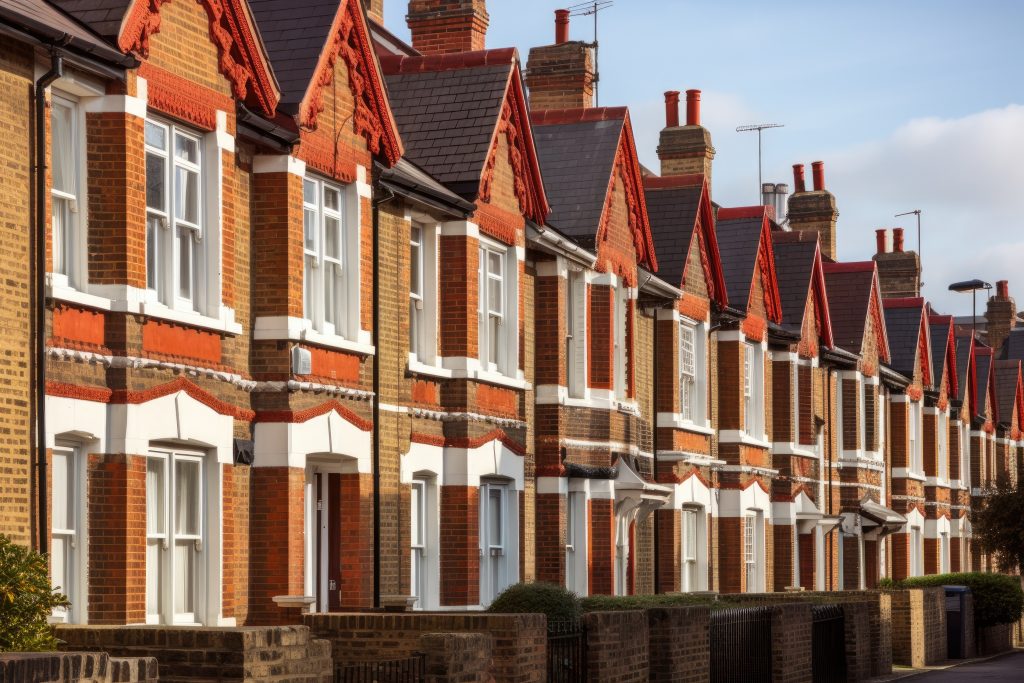
Terraced properties typically share a single drain that runs under the boundary of several houses before joining the public sewer network. Before October 2011, that shared section — known as a private sewer — was the joint responsibility of every homeowner connected to it.
In practice, that meant if the shared pipe failed anywhere along its run, every household connected to it could be liable for a share of the repair cost, even if the fault was nowhere near their own property. A blockage three doors down could still end up costing you money.
What Changed on 1 October 2011
Under the Water Industry (Schemes for Adoption of Private Sewers) Regulations 2011, private sewers and lateral drains transferred automatically to water and sewerage companies. DEFRA described it as the biggest change to sewerage responsibility since 1937.
Since then, the split works like this:
- Pipework serving only your property, from the house to your boundary, remains your responsibility as the homeowner.
- The shared private sewer, from the point it leaves the first connected property’s boundary through to the public sewer, is now the responsibility of the water or sewerage company.
- Sewers built before October 1937 were already publicly owned under the Public Health Act 1936, so this rule isn’t new for the oldest terraces — it simply extended the same principle to everything built since.
For most terraced homeowners, that means the section of pipe you’re actually responsible for is much shorter than it used to be: just the run from your property to the boundary, rather than a shared liability stretching under your neighbours’ gardens as well.
Why This Still Catches People Out
Fifteen years on, the transfer still causes confusion, and it’s easy to see why:
Nobody sent out a new set of plans. The transfer happened automatically, without individual surveys of every street, so there’s no simple document showing exactly where your responsibility ends and the water company’s begins.
Older repairs and quotes reference the old rules. If your understanding of “who pays” hasn’t been updated since before 2011, you may be assuming a liability that isn’t yours anymore — or missing a fault on your own section that genuinely is.
Boundary points aren’t always obvious. In a row of Victorian or Edwardian terraces, working out exactly where your private drain meets the now-adopted shared sewer usually needs a proper survey rather than a guess.
How to Find Out Where Your Responsibility Ends
The only reliable way to know exactly what you’re liable for is to have the drainage mapped. A CCTV drain survey traces the route of your pipework from the property out to the boundary, confirming exactly where your private drain connects to the shared or public sewer.
For a fuller picture — particularly useful if you’re dealing with a recurring issue or trying to establish where a fault sits before calling a repair company — a full drain mapping and locating survey records the depth, direction and connection points of the whole system, so there’s no ambiguity about which sections are yours and which belong to the water company.
What This Means If You Have a Blockage or Fault
If a drain issue in a terraced property turns out to sit within your own boundary, you’ll need to arrange the repair yourself — our emergency drainage team can attend quickly to diagnose the problem, and drain relining is often a faster, less disruptive fix than digging up a shared pipe under a terrace.
If the fault sits beyond your boundary, in the shared section, it’s the water company’s responsibility to repair — but it’s still worth having your own section surveyed first. Confirming exactly where a fault sits before reporting it saves time, avoids a wasted call-out, and gives you evidence if there’s ever a dispute about where responsibility lies.
FAQs
Who owns the drains under a terraced street?
Does this apply to every terraced property?
How do I find out where my responsibility ends?
Who do I call if I'm not sure whose fault it is?
Not sure where your responsibility ends?
Get in touch with Aqua Response on 02920 885660 or info@aquaresponse.co.uk to arrange a CCTV survey or drain mapping report for your property.